Henrik Fischer · 2 September 2026
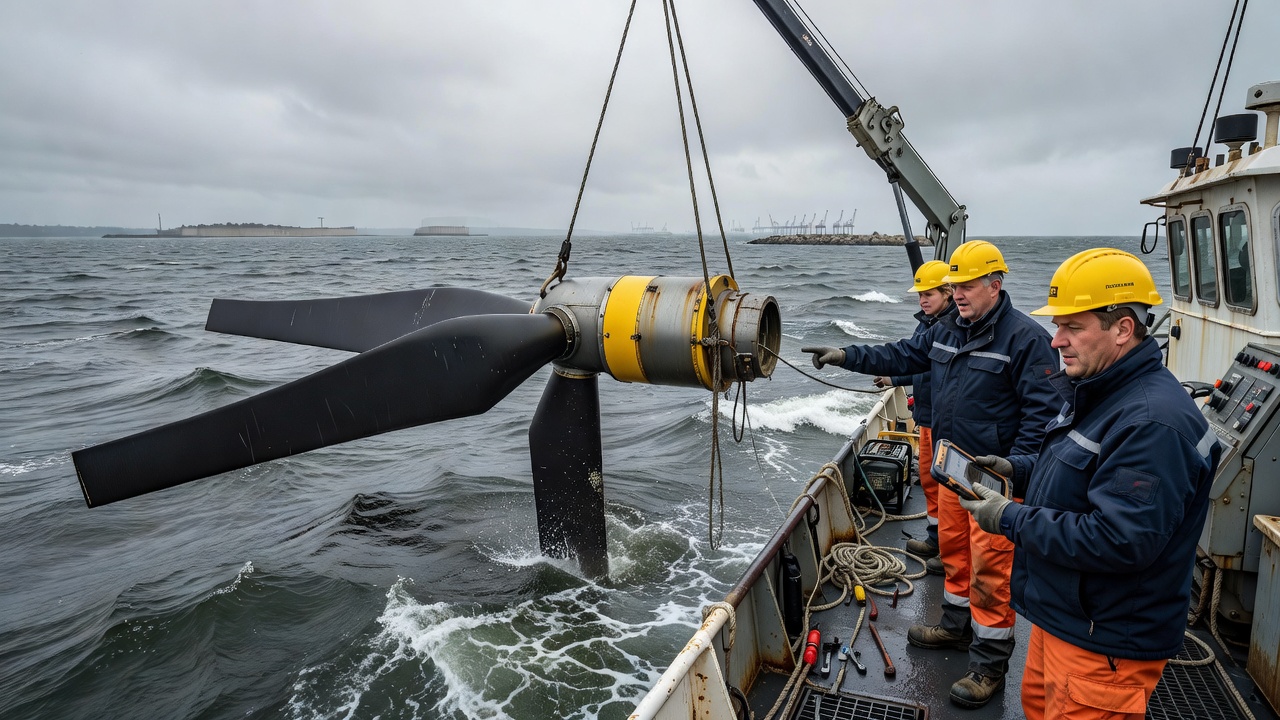
A team of engineers from Poland has completed initial sea trials of a new tidal turbine prototype in the Baltic Sea. The project focuses on adapting turbine technology to the region's moderate current speeds and variable conditions. Researchers deployed the device near the coast of Pomerania for a two-week testing period, gathering data on power output, structural integrity, and environmental interactions.
Testing Procedure and Location
The prototype features a 4-meter rotor diameter and is rated at 75 kilowatts under optimal flow. Sensors monitored vibration, torque, and biofouling rates throughout the trial. Water depths at the site ranged from 18 to 22 meters, with peak currents reaching 1.8 meters per second. Data showed consistent generation above 40 kilowatts during peak flow windows, exceeding early model predictions by 12 percent. No significant corrosion or mechanical issues were recorded after 14 days of continuous operation. The team used a specialized mooring system designed to minimize seabed disturbance, aligning with environmental guidelines from the Polish Maritime Institute.
Analysis of acoustic recordings confirmed low noise emissions, below thresholds that could affect local fish populations. Sediment samples taken before and after deployment indicated minimal resuspension. The turbine was retrieved intact, allowing detailed inspection of blade surfaces and seals in laboratory conditions at the Gdańsk University of Technology.
Future Prospects and Challenges
Project leads noted that the Baltic's lower tidal range requires turbines optimized for slower, more consistent flows compared to ocean sites. Next steps include scaling the design to 250 kilowatts and integrating real-time monitoring software. Funding for a year-long array test involving three units has been secured through national research grants. Challenges remain around winter ice formation and seasonal biofouling, which will be addressed in upcoming cold-water simulations.
Collaborators from several Baltic universities contributed expertise in materials science and marine biology. The trial results will feed into open-source modeling tools intended to support similar low-flow projects across northern Europe. Researchers emphasize that successful adaptation of tidal technology could diversify Poland's renewable portfolio beyond wind and solar, particularly in coastal regions with limited land availability.