Zara Ludwig · 2 September 2026
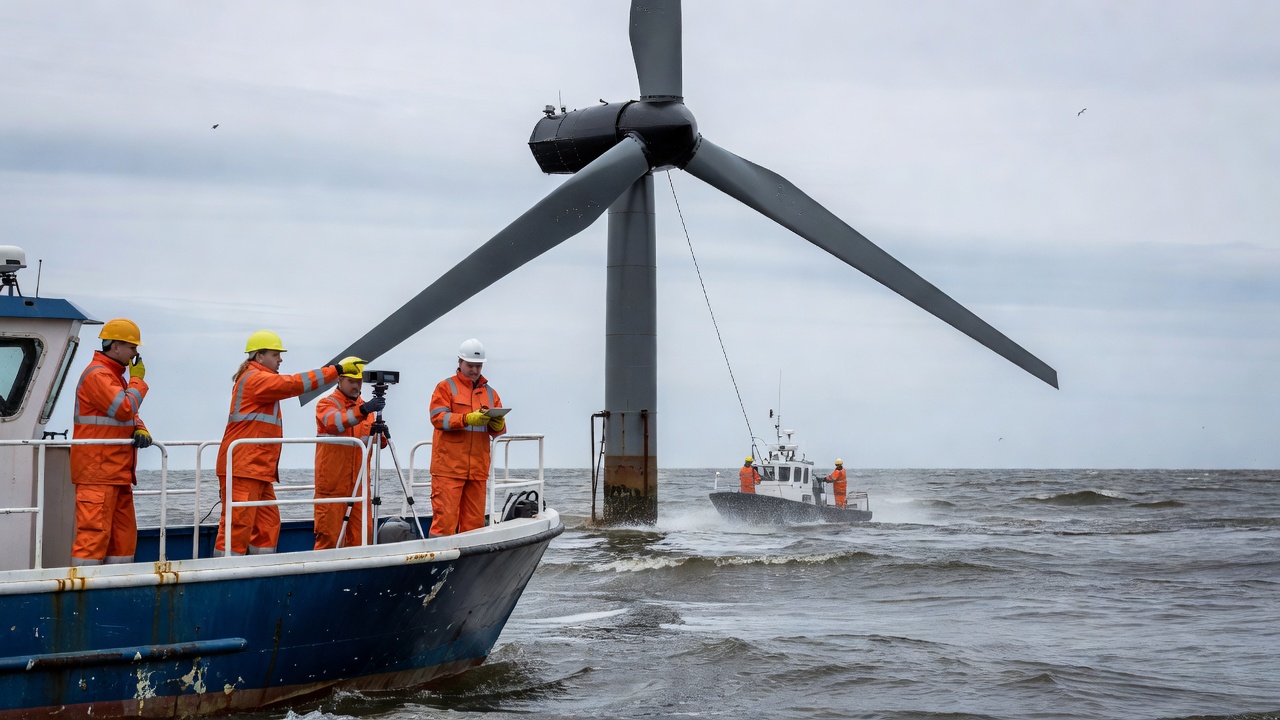
A team from Gdańsk University of Technology has deployed an experimental tidal turbine off the coast of Poland. The device was lowered into the Baltic Sea near the Hel Peninsula to evaluate its performance in regional current conditions. Engineers designed the unit specifically for the Baltic’s modest tidal flows and colder waters.
Prototype Design and Deployment
The vertical-axis turbine uses corrosion-resistant composites and a compact rotor suited to low-velocity streams. Onboard sensors transmit live readings of torque, power output and structural stress. The deployment vessel positioned the unit at a depth of 18 meters where tidal currents reach 0.8 meters per second on average. Initial checks confirmed stable anchoring and correct orientation relative to prevailing flows.
Researchers selected the site after extensive bathymetric surveys that identified consistent current patterns with minimal sediment disturbance. The turbine connects via subsea cable to a floating data buoy that relays measurements to shore-based laboratories every fifteen minutes.
Testing Schedule and Research Goals
Over the coming six months the team will record performance across spring and neap tides as well as winter ice conditions. Data will reveal efficiency under varying salinity and temperature. Project leads expect peak conversion rates near 34 percent, sufficient to power small coastal sensors or contribute to local micro-grids. Results are intended to guide future array layouts along Poland’s Baltic shoreline and support national renewable targets. The study also examines ecological interactions by monitoring fish passage with acoustic cameras. All findings will be published in open-access reports to assist similar low-flow tidal projects elsewhere in northern Europe.