Petra Keller · 2 September 2026
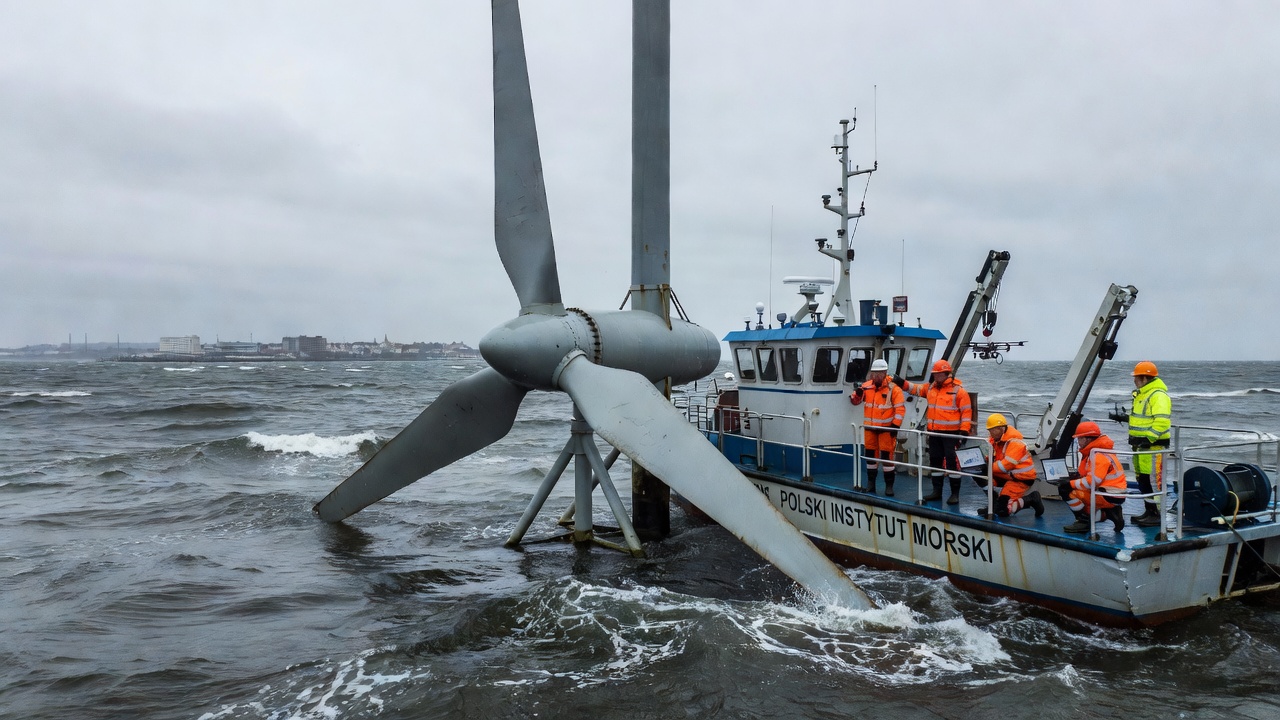
A team of Polish engineers and oceanographers has begun sea trials of a novel tidal energy turbine in the Baltic Sea. The project, led by researchers at the Gdańsk University of Technology, aims to evaluate the performance of a vertical-axis turbine design in low-velocity currents typical of the region. The device was deployed last month after three years of laboratory development and numerical modeling.
Development of the Prototype
The turbine features a 2.5-meter diameter rotor constructed from corrosion-resistant composites. It incorporates adaptive blade pitch control to optimize energy capture at flow speeds between 0.8 and 2.5 meters per second. Laboratory tests conducted in a flume tank demonstrated a peak efficiency of 38 percent, surpassing earlier models by 12 percent. The device is anchored to the seabed using a gravity base foundation that minimizes environmental disturbance to marine habitats. Funding for the initiative comes from the Polish National Centre for Research and Development, with additional support from the European Union’s Horizon Europe program. Collaboration with local maritime authorities ensured compliance with navigation safety regulations during deployment. The brackish conditions of the Baltic required specialized coatings to prevent biofouling and material degradation over extended periods.
Initial Sea Trials and Data Collection
Deployment occurred 12 kilometers off the coast of Hel Peninsula at a depth of 22 meters. Sensors mounted on the turbine and surrounding buoys monitor parameters including power output, structural loads, and acoustic emissions. Early results indicate stable operation during moderate wind-driven currents, with average daily energy production reaching 45 kilowatt-hours under typical conditions. Researchers plan to extend the testing period through the winter months to assess durability against ice formation and storm events. Environmental monitoring teams are conducting parallel studies on fish behavior around the installation to quantify any potential impacts. Data gathered will inform refinements for a larger 50-kilowatt commercial-scale version scheduled for evaluation in 2026. Project coordinator Dr. Anna Kowalska noted that the Baltic Sea presents unique challenges due to its brackish water and variable salinity, requiring specialized materials. The team expects to publish preliminary findings in peer-reviewed journals by the end of the year. This effort contributes to Poland’s broader strategy to diversify renewable energy sources beyond wind and solar power installations.